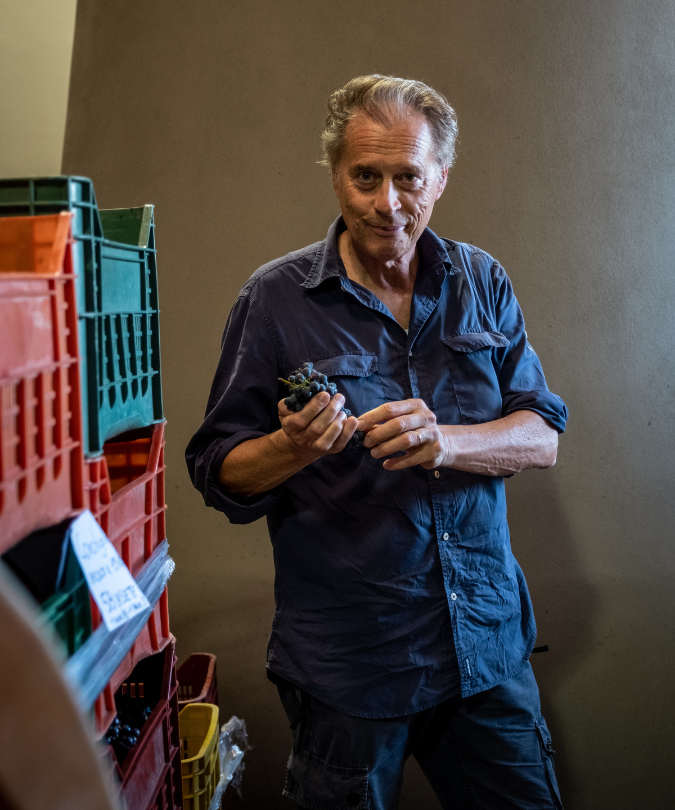

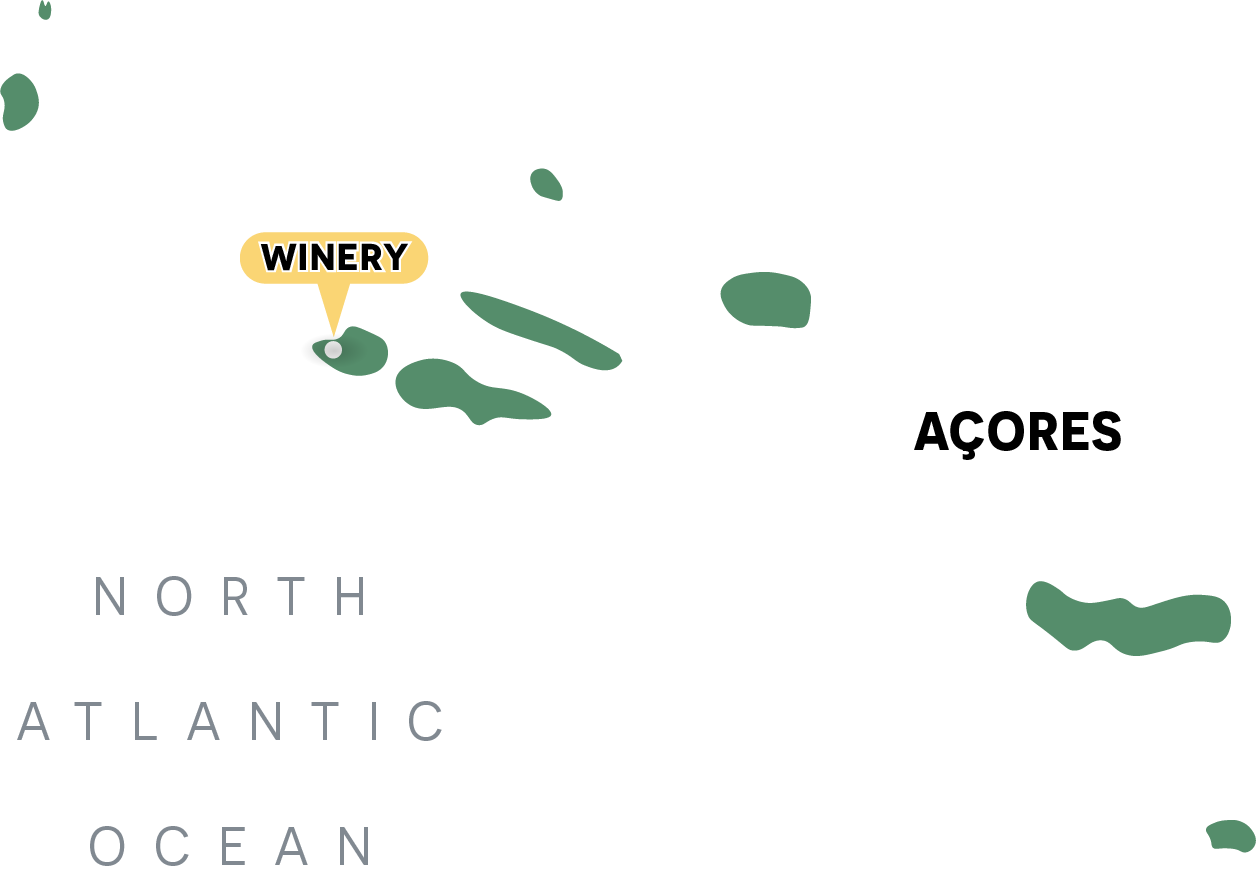
At the edge of the Atlantic, where black lava meets the sea and the wind carries the scent of salt and ash, the story of Adega do Vulcão began with a chance encounter. In 2008, a Florentine couple, Cinzia Caiazzo and Gianni Mancassola, discovered the Açores and immediately fell under their spell. What began as occasional visits soon became something far deeper: a profound connection to the islands, their people, and their extraordinary volcanic landscape.
Drawn by the raw beauty and powerful energy of this remote archipelago, Cinzia and Gianni chose the Açores as their buen retiro, a place of retreat and inspiration. Over time, their dream evolved into a project rooted in passion, patience, and respect for nature: Adega do Vulcão, "the volcano's cellar."
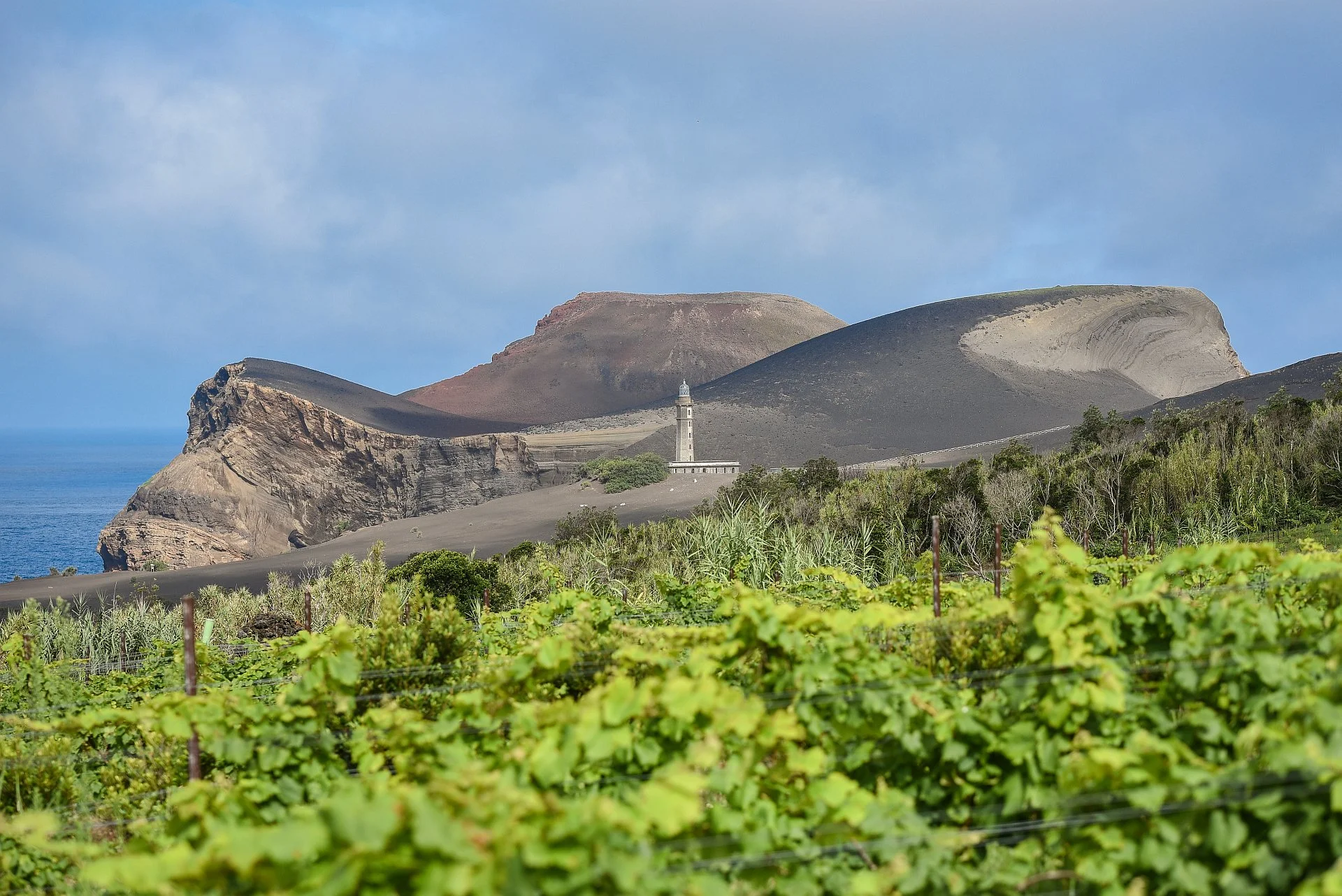
The winery began on the island of Faial, near the legendary Capelinhos volcano. Born from a dramatic eruption in 1957 that began beneath the sea just off the coast, Capelinhos covered the surrounding land with lava, sand, and volcanic ash for more than a year. From that destruction emerged an unparalleled terroir, one that would eventually give life to singular wines shaped by the Atlantic climate and volcanic soils.
Soon, the project expanded to the neighboring island of Pico, home to the iconic UNESCO-protected vineyards planted among ancient lava stone walls. Across these two islands, Adega do Vulcão cultivates about 14 hectares (roughly 35 acres) of vineyards, carefully recovering and preserving native Azorean grape varieties. Production began in 2017, supported by a state-of-the-art cellar on Pico equipped with some of the finest winemaking technology available.
Today, Adega do Vulcão remains a true family endeavor, guided by two generations of Italian entrepreneurs. Cinzia and Gianni are joined by their son Guido and his wife Ann-Sophie, who bring expertise in business management, international development, and marketing to the estate. This second generation ensures that the family's innovative spirit continues to drive the project forward.
Work in the vineyards is carried out under the guidance of renowned consultant Alberto Antonini, and the Regional Government of the Açores actively supports the project for its forward-thinking vision and its potential to inspire sustainable development throughout the region. Working mainly with certified native grape varieties and a commitment to exceptional viticulture and winemaking, the family produces small-batch wines of remarkable identity, wines that capture the intensity of volcanic soil, the freshness of the Atlantic, and the enduring relationship between nature and people.
Adega do Vulcão
Available Products
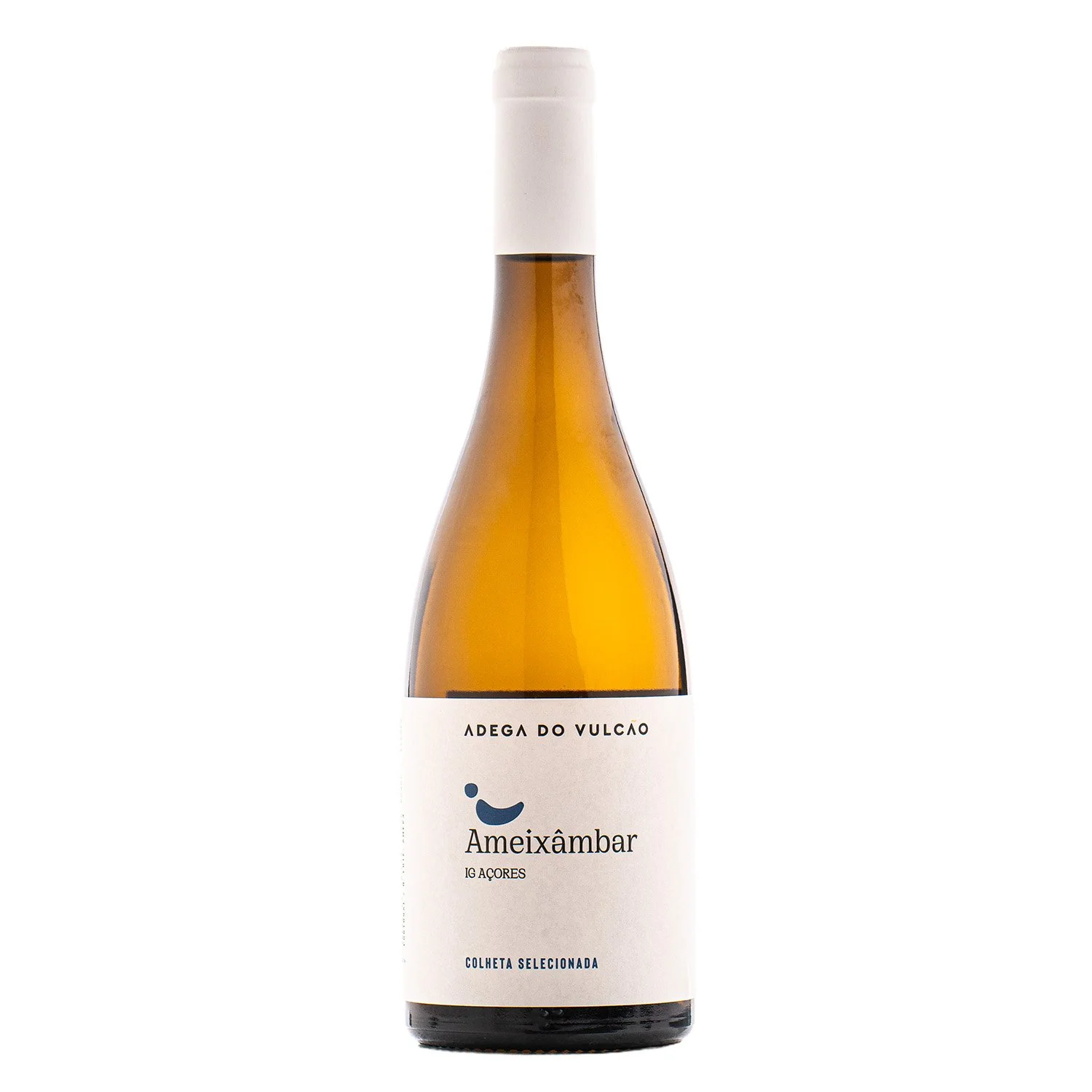
This wine, a blend of native Azorean grapes from the ash soils of Capelinhos on Faial and the lajidos of Criação Velha on Pico, where vines grow in cracks in the bare lava rock, was fermented with indigenous yeasts in tulip-shaped concrete tanks and aged on its lees for 12 months, including 4 months in untoasted French oak. It shows aromas of citrus, stone dust, flowers, and ripe yellow fruit, with a palate that is intensely fresh, saline, and energetic and a long, taut finish that captures the essence of the Atlantic.
Producer: Adega do Vulcão
Winemaker: Alberto Antonini (consulting)
Region: Faial & Pico, Açores
Style: White
Grape Varietals: Arinto dos Açores, Verdelho, Terrantez do Pico
Tasting Notes: Aromas of citrus, stone dust, flowers, and ripe yellow fruit. The palate is intensely fresh, saline, and energetic, with a long, taut finish.
Pairing: Oysters, grilled fish, octopus, lapas (limpets), and fresh cheeses
Ratings: 92+ points, Robert Parker Wine Advocate (2023 vintage). Gold Medal, Mondial des Vins Extrêmes (2023 vintage)
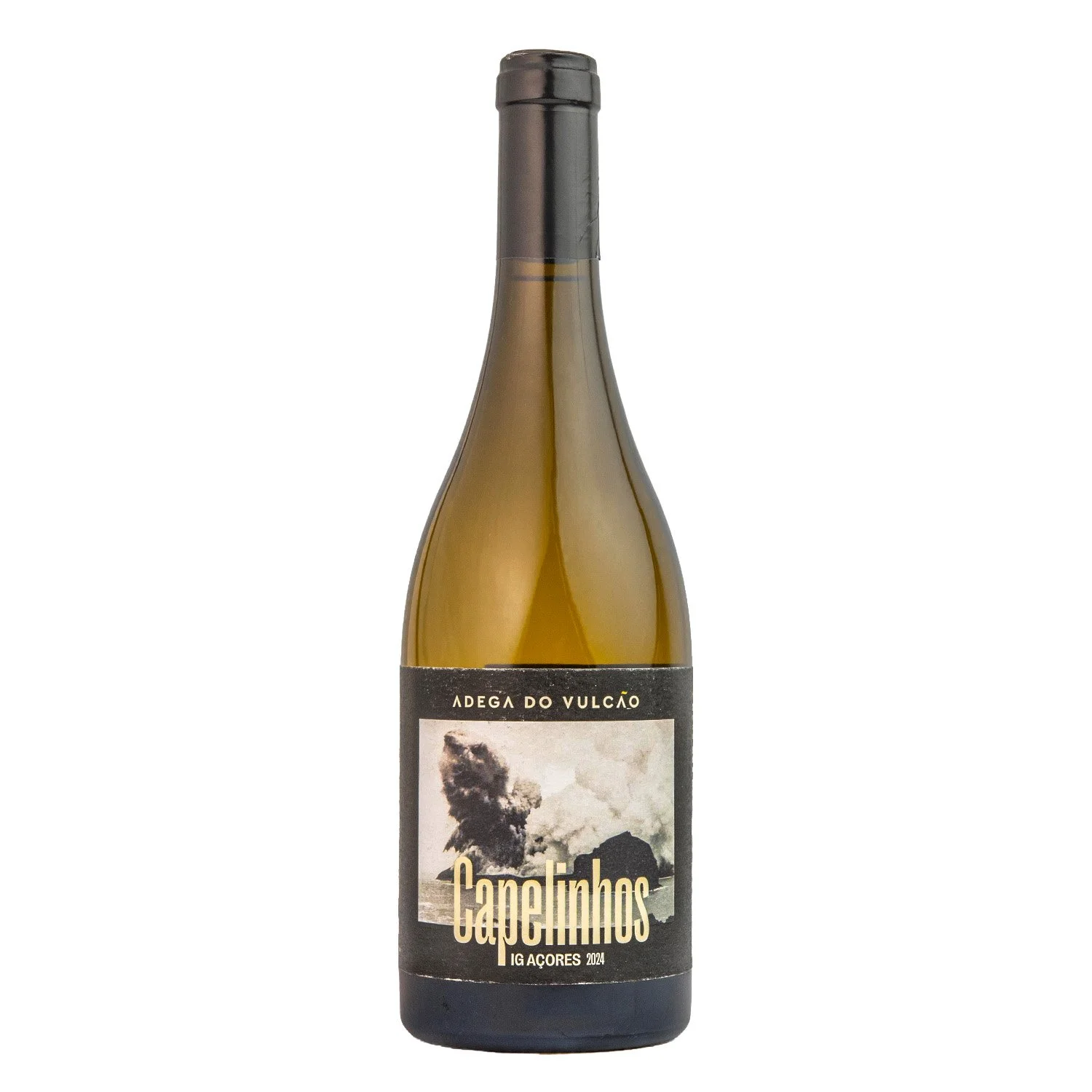
Capelinhos is born from Portugal’s youngest land. In 1957 a submarine eruption off the western tip of Faial buried the surrounding fields in volcanic ash, and in 2016 Adega do Vulcão planted 7 hectares (about 17 acres) of native vines directly in that ash. The grapes are hand-selected, gently pressed, and fermented with indigenous yeasts in cooled tulip-shaped concrete tanks, then aged on the lees for 12 months. The result is a white of striking minerality, with notes of stone, citrus, and flowers, and a palate of intense acidity and deep salinity that tastes, as the winery puts it, “more of rock than of sea air.”
Producer: Adega do Vulcão
Winemaker: Alberto Antonini (consulting)
Region: Capelinhos, Faial, Açores
Style: White
Grape Varietals: Arinto dos Açores, Terrantez do Pico
Tasting Notes: Stone, citrus fruit, and floral notes on the nose. On the palate, very intense acidity and deep salinity, with a mineral, rocky character.
Pairing: Excellent as an aperitif, and with oysters, shellfish, and grilled fish
Ratings: 94 points, Robert Parker Wine Advocate (2023 vintage). 18/20, Paixão pelo Vinho (2023 vintage). Gold Medal, Concurso de Vinhos Certificados dos Açores.
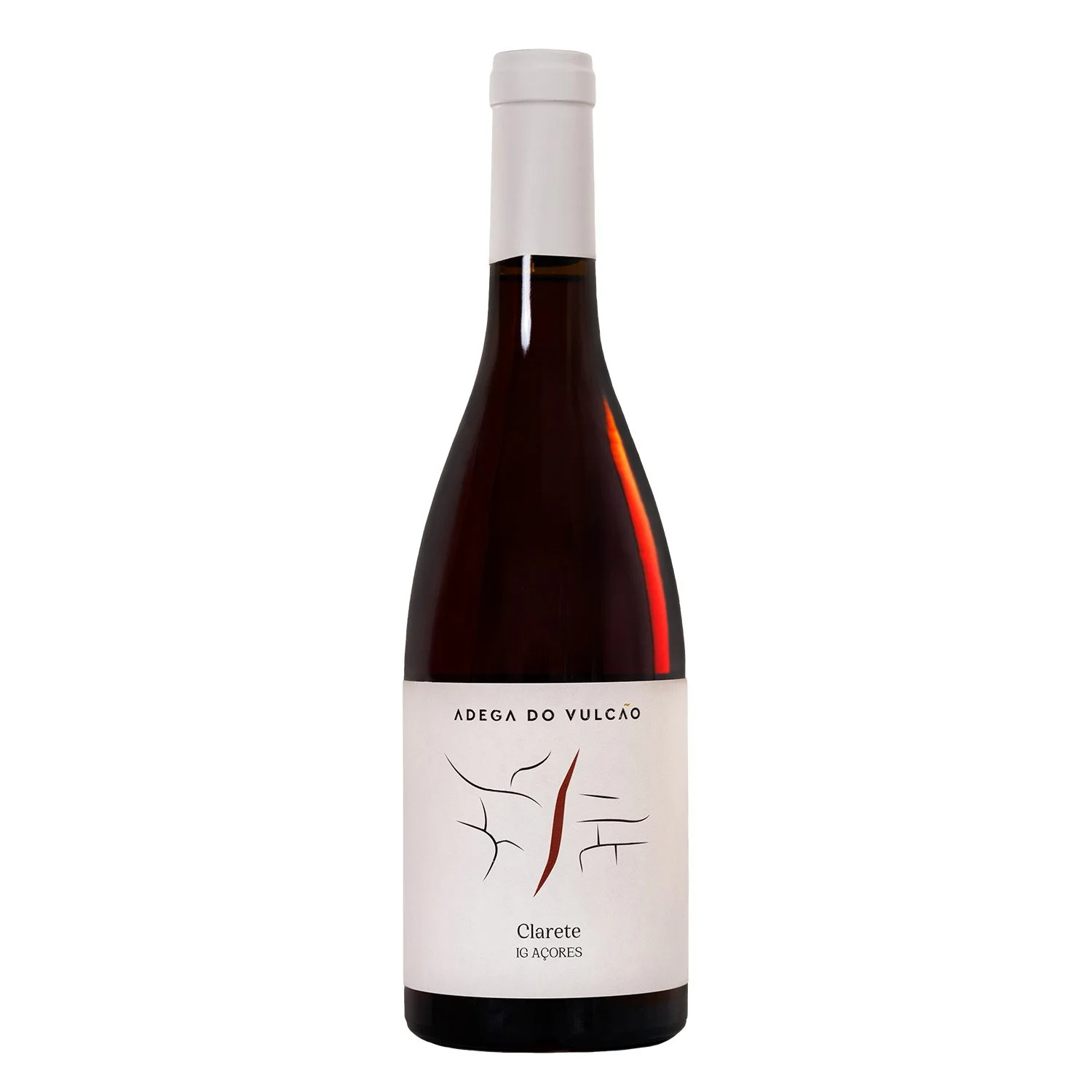
Clarete is Adega do Vulcão’s light, fresh red from the island of Pico, grown in the lajidos of Criação Velha, where vines grow in cracks in the bare lava rock. The grapes are rigorously selected in the vineyard, destemmed, and cold-macerated for three days in stainless steel, then fermented with indigenous yeasts in concrete tanks at no more than 25°C and aged for 12 months. The result is a bright, elegant red with intense strawberry and red fruit, a subtle graphite-like minerality, and a fresh, mineral finish. Serve it slightly chilled.
Producer: Adega do Vulcão
Winemaker: Alberto Antonini (consulting)
Region: Pico, Açores
Style: Red (Clarete)
Grape Varietals: Syrah, Merlot
Tasting Notes: Intense red fruit, especially strawberry, with subtle graphite-like minerality on the nose. The palate is light, fresh, and elegant, with balanced acidity and a mineral finish.
Pairing: Versatile. Excellent as an aperitif, and with grilled fish, seafood, octopus, and lean meats
Ratings: Coming Soon
Alberto Antonini - Winemaker
Born in 1959 near Florence, Alberto Antonini studied agriculture at the University of Florence and went on to study winemaking in Bordeaux and at UC Davis in California. He began his career at Frescobaldi, became technical director at Col d'Orcia in Montalcino, and later succeeded the legendary Giacomo Tachis as head winemaker at Antinori. He also worked in California with Robert Mondavi, Au Bon Climat and Qupé.
In 1995 he helped launch Altos Las Hormigas in Mendoza, an early champion of Argentine Malbec, and in 1997 he co-founded Matura, a team of winemakers and agronomists who work with estates around the world. Today he consults across Italy, the Americas, Armenia and Australia, and makes wine at his family's estate, Poggiotondo, in Tuscany. In 2015 his peers voted him one of the five best winemakers in the world.
Antonini is known for urging winemakers to move away from copying Bordeaux and return to native grapes, traditional methods and minimal intervention, so the wine tastes of where it was grown. That philosophy made him a natural fit for the Açores. A longtime friend of Cinzia Caiazzo and Gianni Mancassola, he was part of Adega do Vulcão from the beginning and guides the work in the vineyards and the cellar. On Faial, the team restored and replanted more than 100 small plots in the volcanic ash left by the Capelinhos eruption. On Pico, they farm old vines in Lajido da Criação Velha, inside the UNESCO World Heritage landscape, where vines grow in cracks in the lava behind basalt walls. The goal is wines that are textured, mineral and pure, expressing the islands more than the fruit.